Last field-assessed: April 2026

The Giza Plateau — Complete Visitor Guide

The Giza Plateau holds the three Great Pyramids, the Great Sphinx, five subsidiary pyramid complexes, multiple mastaba fields, the Solar Boat Museum, and the Grand Egyptian Museum on its western approach. This guide covers current access conditions, ticket structure, crowd patterns, and what is actually worth your time on the plateau.

Field-tested since 2011

What the Giza Plateau Is and Is Not

The Giza Plateau is a limestone escarpment on the western edge of Cairo, roughly 12 kilometres from Tahrir Square. The pyramids visible from the Cairo ring road are the three main structures — Khufu (Cheops), Khafre, and Menkaure — built during the 4th Dynasty between approximately 2589 and 2503 BCE. They were not built by slaves: Egyptian papyri discovered at Wadi el-Jarf in 2013 document the logistics operation that fed and managed the pyramid workforce, which was organised into rotating state labour gangs with documented rations and medical care.

The plateau is a large, open archaeological site. There are no ropes marking every path, no shaded waiting areas at most points, and in summer — May to September — ground temperatures at the exposed limestone base of the pyramids frequently exceed 50°C. Visitors who arrive without water, appropriate footwear, and sunscreen cause the majority of medical incidents recorded at the site each year. The plateau rewards those who prepare; it punishes those who do not.

  • Current operating hours: 08:00–17:00 daily (last entry 16:30)
  • Plateau access ticket: EGP 400 (international visitors as of April 2026)
  • Great Pyramid interior: separate ticket, EGP 700; limited daily allocation
  • Khafre Pyramid interior: separate ticket, EGP 400
  • Solar Boat Museum: separate ticket, EGP 300
  • Grand Egyptian Museum: separate ticketing, see Cairo Museums guide
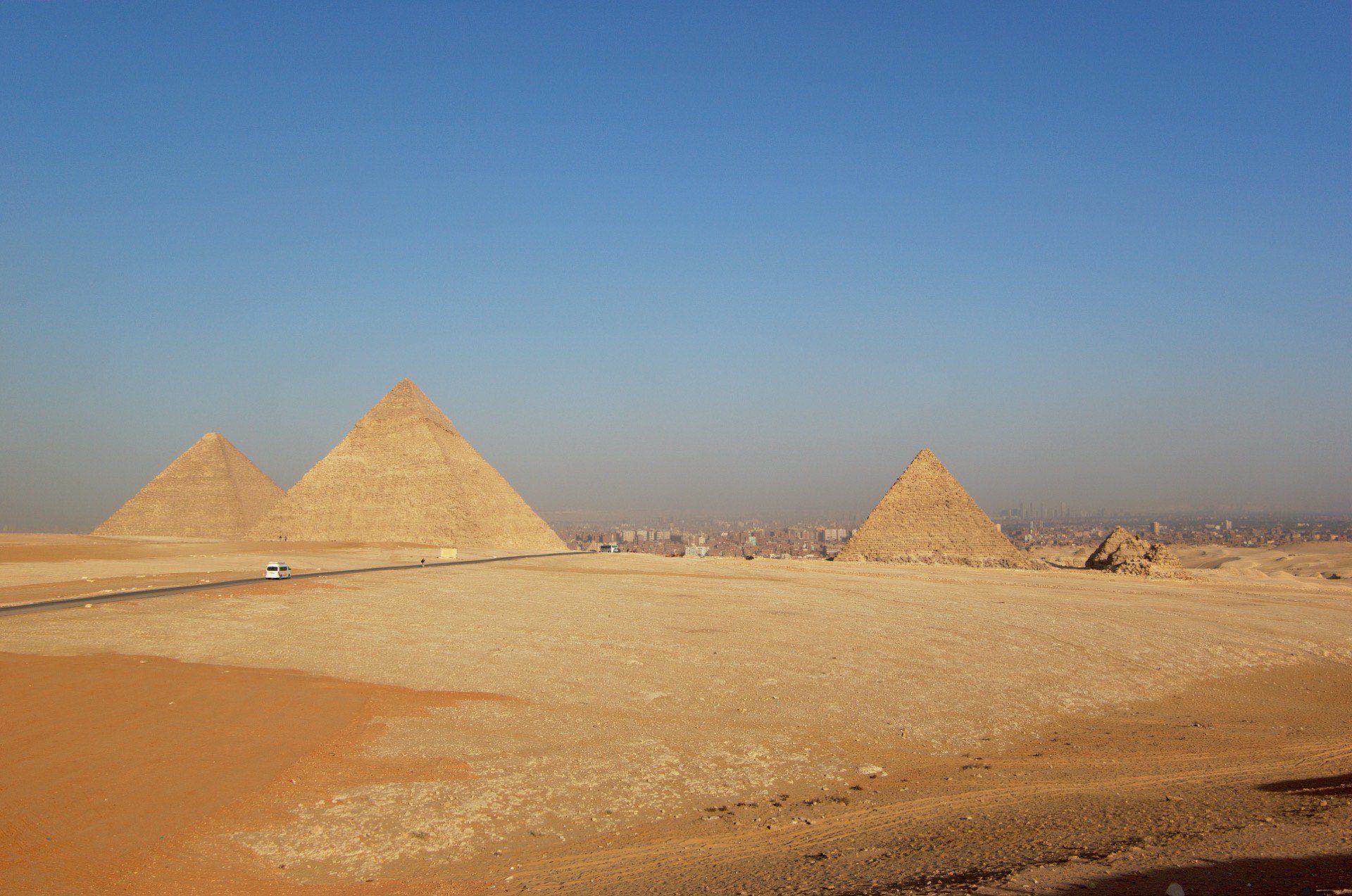
Three Great Pyramids of Giza against the Egyptian sky at sunrise
The Core Monuments

The Three Great Pyramids

Each pyramid has a distinct character — structurally, architecturally, and in visitor experience terms. The standard approach of photographing all three from the panoramic viewpoint to the south is fine for an overview, but misses the details that make each structure genuinely different.

Great Pyramid of Khufu exterior casing stones at the base Giza

Pyramid of Khufu

The Great Pyramid

Originally 146.5 metres tall, now 138.5 metres due to the loss of its limestone casing and capstone. Built under Pharaoh Khufu (Cheops) around 2560 BCE, it remained the tallest man-made structure on earth for approximately 3,800 years. The interior contains three chambers — the Subterranean Chamber (unfinished), the Queen's Chamber (misnamed; no queen was buried there), and the King's Chamber — accessed via the Grand Gallery, a corbelled ascending passage 47 metres long and 8.5 metres high. Interior access requires a separate daily-limited ticket; book in advance during peak months. In 2023–2024, a hidden corridor was identified through cosmic ray muon tomography above the north face entrance.

Pyramid of Khafre with limestone casing intact at the apex Giza Egypt

Pyramid of Khafre

Khafre's Pyramid — Intact Apex

Built under Khufu's son Khafre around 2530 BCE, this pyramid appears taller than Khufu's because it stands on higher ground. It is in fact slightly smaller — 136 metres originally. Its most distinctive feature is the band of original Tura limestone casing preserved at the apex, the best surviving example of the smooth white limestone surface that all three pyramids once displayed. The interior has two entrances — one near the base of the north face, one lower on the north face — and a single burial chamber containing Khafre's granite sarcophagus, lid intact. The pyramid complex includes the Valley Temple at its foot, whose granite-lined halls are among the most finely dressed stonework surviving from the Old Kingdom, and the famous Sphinx causeway.

Pyramid of Menkaure smallest of the three great pyramids Giza plateau

Pyramid of Menkaure

Menkaure's Pyramid — Most Accessible

The smallest of the three main pyramids, originally 65 metres, built under Khafre's son Menkaure around 2510 BCE. A section of the red granite casing at the base is clearly visible, distinguishing Menkaure's pyramid from the limestone-cased structures above. The interior is accessible without additional ticketing and is significantly less crowded than Khufu's. The burial chamber contains a carved granite sarcophagus — the original was lost when the ship transporting it to England sank in 1838. The three subsidiary Queens' Pyramids to the south are enclosed but visible and explain the standard pyramid complex format: a satellite pyramid for the queen's Ka-statue, a mortuary temple, and a causeway to the valley temple.

Beyond the Pyramids

The Great Sphinx and Solar Boat Museum

Two of the plateau's most significant monuments are routinely given less attention than they deserve — the Great Sphinx, whose diorite stele and restoration history raise important questions, and the reconstructed cedar Solar Boat, one of the world's oldest intact wooden vessels.

The Great Sphinx of Giza with the Pyramid of Khafre behind it

The Great Sphinx

Carved directly from a natural limestone outcrop during the reign of Khafre (c. 2530 BCE), the Great Sphinx is 73 metres long and 20 metres high, with a human head — presumed to represent Khafre — on a lion's body. The figure faces due east and is aligned to the rising sun at the spring and autumn equinoxes, an alignment that may be intentional given the solar theology prominent in 4th Dynasty royal cult.

The so-called Dream Stele erected between the Sphinx's paws by Thutmose IV (c. 1400 BCE) records a promise made to the young prince during a dream in which the Sphinx requested clearance of the sand burying its body in exchange for granting him the throne of Egypt. The subsequent clearance of the Sphinx is the first recorded archaeological restoration project in history.

Modern restoration work has been ongoing since the 1980s, applying limestone blocks to replace the severely eroded outer courses. The most recent phase of repair, completed in 2022, addressed the base courses on the south flank. Visitor access is to a terrace in front of the Sphinx; direct approach to the figure itself is not permitted.

Also read: Ancient Temples of Egypt
The reconstructed cedar Solar Boat of Khufu in its climate-controlled museum at Giza

Khufu Solar Boat Museum

In 1954, Egyptian archaeologist Kamal el-Mallakh discovered a sealed boat pit on the south side of the Great Pyramid containing 1,224 dismantled cedar timber pieces. When reassembled — a process that took fourteen years — they formed a complete ceremonial vessel 43.6 metres long, built without a single metal nail and preserved by the sealed limestone blocks and cedar chips that consumed the oxygen in the pit over 4,500 years.

The boat is displayed in a climate-controlled museum built directly over its original pit. A second boat pit, discovered in 1987, was excavated between 2011 and 2019 and found to contain a second vessel in poorer condition due to humidity infiltration. A new permanent display facility for the second boat, incorporating the original pit, is currently under construction adjacent to the first museum.

The Solar Boat Museum requires a separate ticket from the main plateau ticket. It is open within general plateau hours and is almost never crowded to the extent that the pyramid exteriors are, making it one of the plateau's most rewarding experiences per visitor per minute. Allow 45 minutes minimum.

Also read: Nile Cruises guide
Certified Specialists

Crowd Timing & Visit Planning

The Giza Plateau handles roughly three million visitors per year. Understanding the crowd patterns determines whether you share the Sphinx terrace with twelve people or twelve hundred.

Month Temperature Crowd Level Our Assessment
January – February 16–20°C daytime Moderate–High Peak European winter tourism. Comfortable temperatures but heavy coach tour presence from 09:30. Arrive at opening (08:00) for first two hours with manageable crowds.
March – April 22–30°C daytime High Spring school groups and Easter travel. Busiest period for the Sphinx terrace. Great Pyramid interior tickets sell out by 09:30 on busy days — book online in advance.
May – June 33–40°C daytime Moderate European tourist numbers decline. Extreme ground heat. Solar Boat Museum interior more viable during midday. Pyramid interiors uncomfortably hot June onwards. Morning-only visits strongly recommended.
July – August 38–44°C daytime Low Quietest period on the plateau. Conditions are severe — a 08:00 start, departure by 11:30, return in late afternoon if desired. The experience for those who can manage the heat is dramatically different from peak season.
September – October 28–35°C daytime Moderate Transitional month. Crowds begin rebuilding from October. October light quality is excellent for photography — the afternoon sun illuminates the west face of the pyramids directly. Avoid public holiday periods (Egyptian National Day, Oct 6).
November – December 18–25°C daytime High November is one of our top two recommended months for a balanced experience — comfortable temperatures, strong visitor infrastructure in operation, and somewhat lower crowd density than January. December peaks sharply in the final week around the Christmas travel period.

Crowd level designations: Low — under 500 concurrent visitors; Moderate — 500–1,500; High — over 1,500. These are estimates from quarterly site assessments.

Continue Exploring

Related Destination Guides

Cairo

Cairo Museums Guide

The Grand Egyptian Museum at Giza and the Egyptian Museum on Tahrir Square hold the world's largest collections of pharaonic material. Our museum guide covers current display organisation, the GEM's Tutankhamun gallery, and the best section-by-section routing.

Read Cairo Museums

Upper Egypt

Ancient Temples Overview

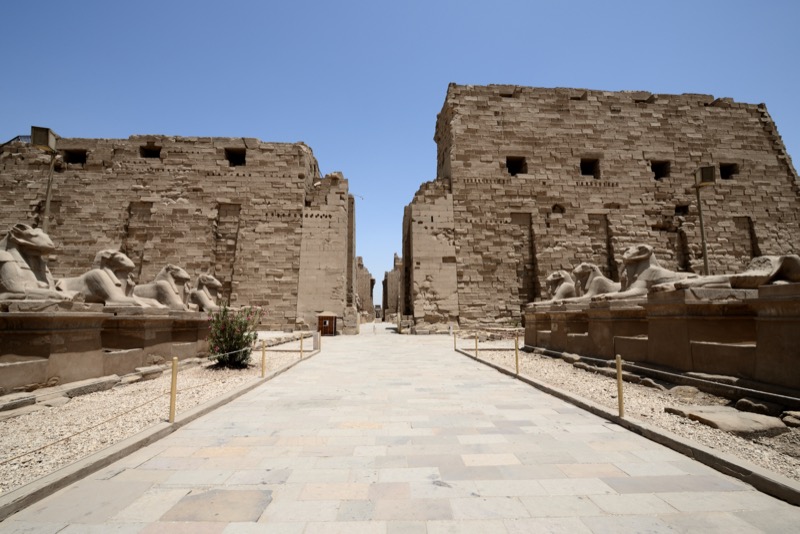
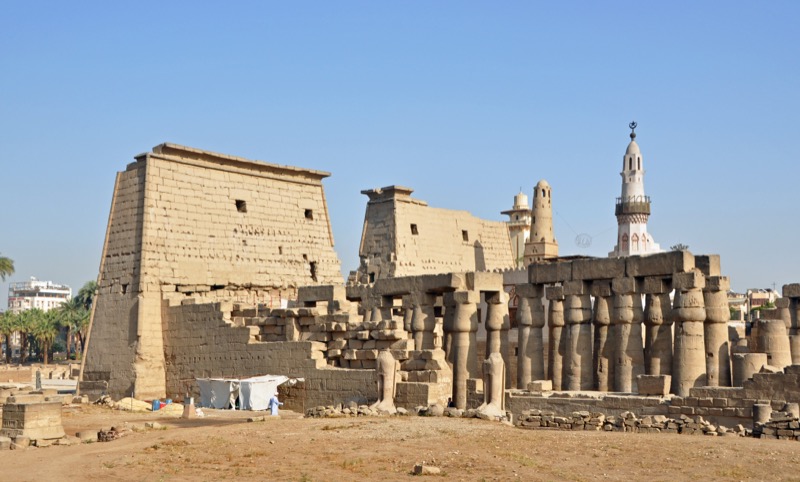
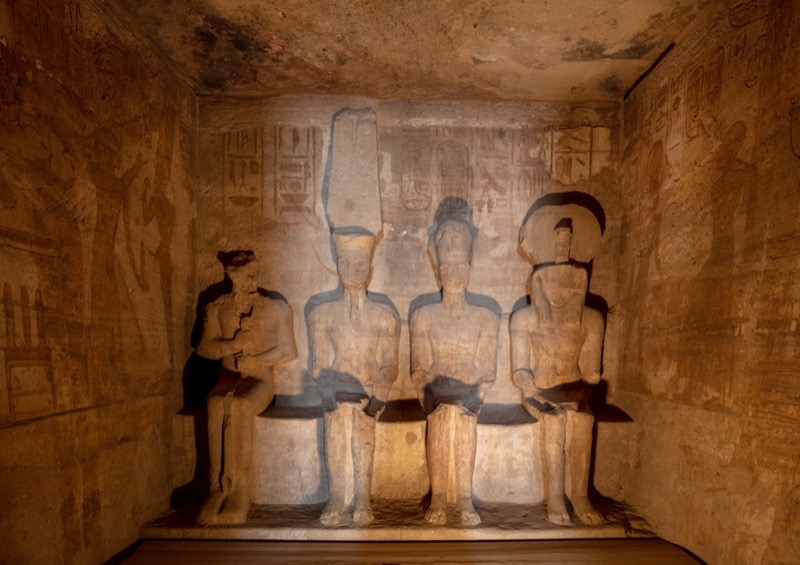
Karnak, Luxor Temple, Abu Simbel, Medinet Habu, and the Ptolemaic temples of Edfu and Kom Ombo reviewed in full — with current access conditions, crowd timing, and the historical context needed to read the relief programmes on the walls.

Read Temples Guide

Practical

Visitor Tips for Egypt

What to wear, what to carry, how to handle tipping, photography permit procedures, and the practical details that determine whether a day on the Giza Plateau is memorable for the right reasons.

Read Visitor Tips