Itinerary structures · Specialist routes · Field-tested advice
Egypt is a large country with remarkable heritage concentrated in specific corridors — the Nile Valley from Cairo south to Aswan, and the Nile Delta to the north. Choosing how to structure your time across these regions is the most consequential planning decision you will make. This guide presents the main structural options our team recommends based on trip length, travel priorities, and budget.
Seven days is the most common trip duration for first-time visitors to Egypt. There are two fundamentally different ways to structure a week — what we call the North-South Circuit and the Depth-over-Breadth approach. Both are valid; the choice depends on your priorities.
Option A · Standard Circuit
The classic first-timer itinerary: two days in Cairo (Giza Plateau, Grand Egyptian Museum, Egyptian Museum Tahrir), fly to Luxor, spend one day on the East Bank (Karnak, Luxor Temple), one day on the West Bank (Valley of the Kings, Deir el-Bahari), board a four-day cruise to Aswan via Esna, Edfu, and Kom Ombo, then one day in Aswan (Philae Temple) before flying home.
This itinerary covers an extraordinary amount of ground and gives you genuine contact with Egypt's major monument types — pyramids, temples, tombs, and a museum collection. Its weakness is pace: two days in Cairo is never quite enough, and the West Bank in one day forces you to choose between the Valley of the Kings and everything else. Our Researcher plan can produce a day-by-day document optimising this circuit for your specific interests.
See the cruise guide for route detail
Option B · Depth-Focused
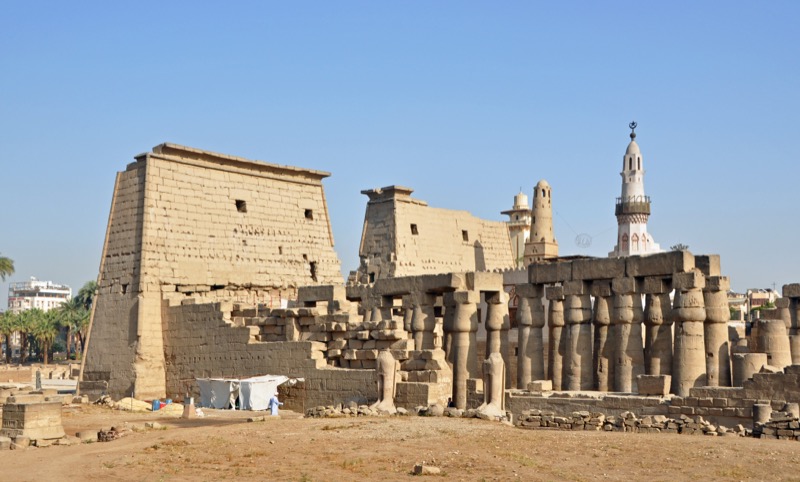
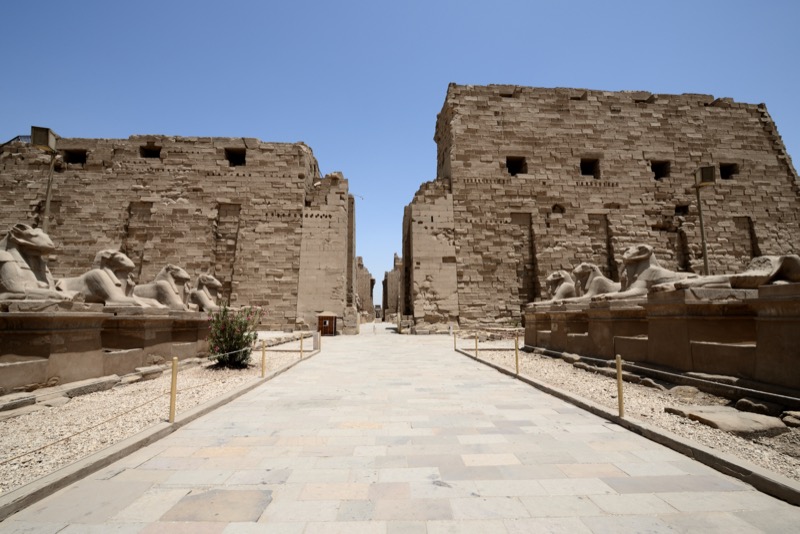
Spend the full seven days based in Luxor, with a one-day day trip to Cairo for the Grand Egyptian Museum. Three or four days on the East Bank (Karnak twice — once in the morning, once for the Sound and Light show — Luxor Temple in the evening, Luxor Museum) and three days on the West Bank covering the Valley of the Kings thoroughly, the Tombs of the Nobles, Medinet Habu, and Deir el-Bahari.
This approach treats Luxor as the destination it is rather than a transit point on a circuit. By the end of a week based in Luxor, most visitors feel they understand the site in a way that a rushed North-South circuit cannot provide. The trade-off is that you will not reach Abu Simbel or Aswan unless you add a one-night extension. We recommend the Luxor-focused approach for repeat visitors, researchers, and anyone with a specific interest in tomb or temple painting.
See the complete Luxor guideFourteen days allows Egypt to be approached properly — with time at major sites, access to the mid-tier and specialist sites that most one-week itineraries skip, and a logistical pace that does not produce exhaustion by day five.

Full Circuit
Three days in Cairo (Giza, GEM, Egyptian Museum Tahrir, Islamic Cairo and Coptic Museum on a third day), fly to Luxor for three days on East and West Banks, a seven-day dahabiya or motor cruise to Aswan with extended stops at Edfu and Kom Ombo, one day at Abu Simbel from Aswan, and one day at Philae and Aswan's monuments before flying home. This is the most complete single-trip coverage of Egypt's headline monuments achievable in two weeks.
Cruise guideSpecialist Route
Three days in Cairo, then a self-drive or chauffeured journey south through Middle Egypt with stops at Beni Hassan (rock-cut tombs), Tuna el-Gebel (Greco-Roman animal catacombs), Hermopolis (Thoth sanctuary), and Amarna (Akhenaten's capital, now Tell el-Amarna), arriving in Abydos for the Temple of Seti I and the Osireion before continuing to Luxor for a full four days. This itinerary covers sites that most visitors to Egypt never reach and provides a continuous south-Nile narrative from the Old Kingdom to the New Kingdom.
Temple reviewsResearcher Route
Seven full days in Luxor covering every accessible site on both banks, including lesser-visited tomb clusters and multiple visits to Karnak at different times of day, followed by a two-day side trip to Alexandria by train (Bibliotheca Alexandrina, Catacombs of Kom el-Shuqafa, Pompey's Pillar, National Museum), then three days in Cairo (GEM, Egyptian Museum, Saqqara). This route suits researchers who have visited the main circuit before and want systematic depth at Luxor combined with the Alexandrian heritage.
Cairo museums guideMiddle Egypt — broadly the region between Cairo and Luxor — contains extraordinary archaeological sites that receive a fraction of the visitor numbers of Giza or Karnak. These sites are not difficult to reach; they simply require independent logistics rather than an organised tour.
Minya · Middle Egypt
The Middle Kingdom tomb chapels of provincial governors carved into the eastern limestone cliffs at Beni Hassan contain some of the finest painting surviving from any period of Egyptian art — wrestling scenes, military campaigns, agricultural cycles, and international trade documentation that are not replicated elsewhere. Twelve tombs are accessible; the most important are BH3 (Khnumhotep II), BH2 (Amenemhat), and BH15 (Baqet III). The site requires boat access from the Minya bank and benefits from improved visitor infrastructure since 2019.
Speos Artemidos, a rock-cut chapel dedicated to the lioness goddess Pakhet and begun by Hatshepsut, is a 30-minute walk from Beni Hassan and carries an unusual text in which Hatshepsut addresses criticisms of her rule — one of the most direct surviving royal first-person statements in Egyptian history. The painted ceiling retains significant colour. Both sites are best visited as a full-day excursion from Minya or as a stop on a Cairo–Luxor road journey. Security escort requirements for Minya Governorate are addressed in our Middle Egypt briefings.
Minya · Middle Egypt
The site of Akhenaten's short-lived capital city, built from scratch on a virgin desert site and abandoned within twenty years of its founding, is one of the most atmospheric and thought-provoking sites in Egypt. The city was never rebuilt over, meaning its street plan and building foundations survive in their original location — an urban archaeological record almost without parallel in the ancient world. The rock-cut royal and noble tombs on the eastern cliffs carry the distinctive Amarna style relief programme — elongated figures, rays ending in human hands, domestic scenes of the royal family — that represents the most radical artistic departure in Egyptian history.
Access requires a boat crossing from the West Bank town of Mallawi to the East Bank site. The tombs are open; the ancient city remains accessible across a site managed by the Amarna Research Foundation, which conducts ongoing excavation seasons. Our Amarna briefing covers current tomb access status, the archaeological site layout, and the most meaningful routing through both the tombs and the city foundations. The site's isolation and authentic archaeological atmosphere are its defining qualities.
Sohag Governorate · Upper Egypt
Abydos, one of Egypt's most sacred cities, was the mythological burial place of Osiris and the site of the earliest royal tombs from the formative period of Egyptian civilisation. The town of Abydos was a major pilgrimage destination throughout Egyptian history; its cemeteries document an unbroken sequence of royal and elite burials from the 1st Dynasty through the Roman period. The site most visitors come for is the Temple of Seti I, built around 1279 BCE and retaining the most complete and finest polychrome relief programme surviving from any ancient Egyptian building.
The Seti I temple contains seven chapels dedicated to seven deities — Osiris, Isis, Horus, Amun-Re, Re-Horakhty, Ptah, and the deified Seti himself — and the Abydos King List, an inscription documenting the names of 76 pharaohs from the 1st Dynasty to Seti I's reign, which was fundamental to establishing Egyptian chronology before the development of radiocarbon dating. Behind the main temple, the Osireion — a subterranean cenotaph of Seti I designed to simulate the primordial mound of creation, now partially flooded — is accessible and architecturally extraordinary. Abydos is reachable from Luxor by road (130 km) or as part of a Middle Egypt itinerary.
Practical
Whatever itinerary structure you choose, the practical preparation is the same — what to carry, how to dress, photography rules, tipping norms, and the specific realities of navigating Egypt's sites independently or within a group.
Read Visitor TipsRiver Route
How the Nile cruise fits into these itinerary structures — what it covers well, what it misses, and how to supplement it with independent days for the sites the ship's schedule doesn't allow time to see properly.
Read Nile CruisesUpper Egypt
Whichever itinerary structure you choose, Luxor is almost certainly part of it. Our Luxor guide covers every site on both banks with current access conditions, transport logistics, and day-by-day sequencing advice.
Read Luxor Guide