Ancient Thebes · Last assessed March 2026
Ancient Thebes, now Luxor, was the religious capital of Egypt for most of the New Kingdom period and contains the highest concentration of pharaonic monuments anywhere on earth. This guide covers the East Bank temples, the West Bank tomb valleys, transport logistics, and the practical details that determine whether your Luxor visit is rewarding or overwhelming.
Egyptian cosmology assigned the east — where the sun rises — to the living world, and the west — where it sets — to the realm of the dead. This division is architectural fact at Luxor: the East Bank holds the temples of the gods, the West Bank holds the tombs of the pharaohs and their officials.
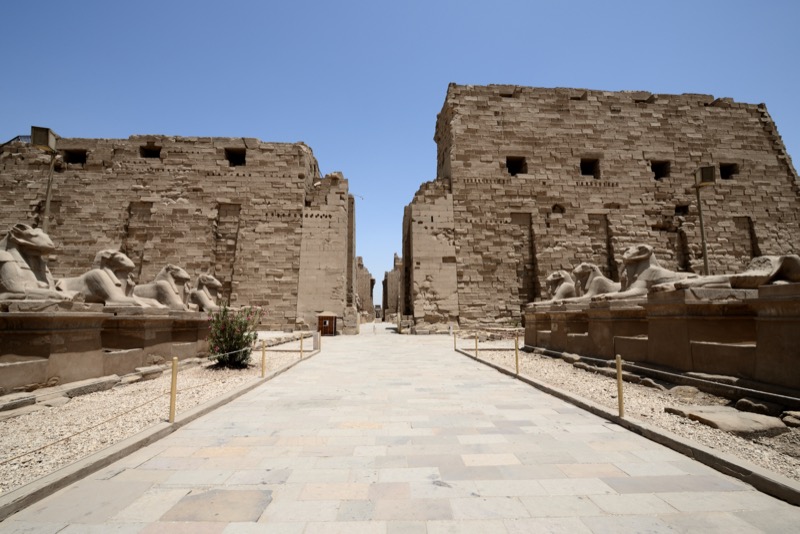
East Bank · Living City
The East Bank is home to Karnak Temple Complex and Luxor Temple, connected since 2021 by the fully excavated Avenue of Sphinxes. The modern town of Luxor sits between and around these temples; accommodation, restaurants, the Luxor Museum, and the Mummification Museum are all on this side. Karnak requires a minimum of three hours; Luxor Temple two hours, better extended into the evening for the illuminated visit.
The Luxor Museum, a short walk north of Luxor Temple, is one of Egypt's finest museum installations — small, well-lit, and holding outstanding individual pieces including the Cachette Statues from Karnak and the intact tomb group of Ramesses II's general Yuny. It is routinely overlooked by visitors who exhaust themselves at the main temples. Allow 90 minutes and consider it a fixed part of the East Bank day.
Full temple reviews
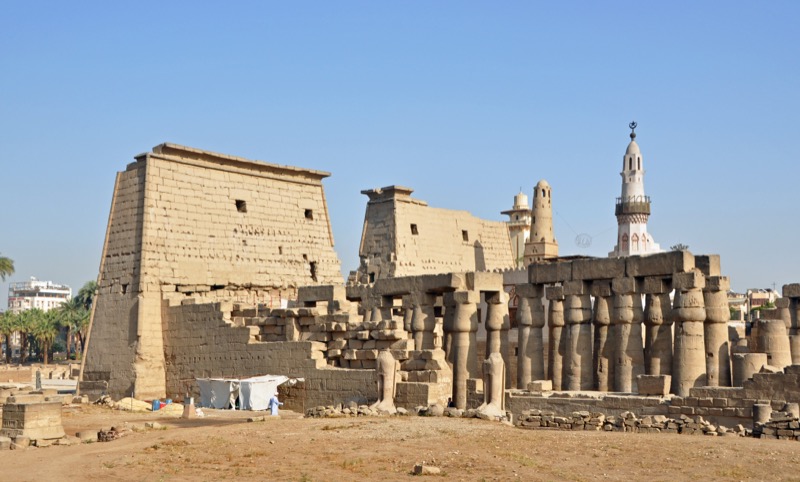
West Bank · City of the Dead
The West Bank contains the Valley of the Kings, Valley of the Queens, the private tomb chapels of Shaikh Abd el-Qurna, the mortuary temples of Deir el-Bahari (Hatshepsut), Medinet Habu (Ramesses III), and the Ramesseum (Ramesses II), plus the Tombs of the Nobles and the workers' village of Deir el-Medina. A single West Bank day can hold perhaps three or four sites at a comfortable pace; any more than that produces diminishing returns from fatigue.
Access to the West Bank requires crossing the Nile — by public ferry from the East Bank landing (EGP 5, takes ten minutes) or by private motorboat arranged from the Corniche. Microbuses and taxis operate from the West Bank ferry landing to the main sites. The Luxor Pass, available at major sites, provides unlimited access to all West Bank monuments for one or five days and represents good value for visitors planning more than two West Bank days.
West Bank tour optionsSixty-three tombs have been recorded in the Valley of the Kings. Current standard access covers approximately eighteen to twenty. Choosing which to prioritise requires knowing what distinguishes them — our field team has assessed all currently open tombs and summarises the most significant below.
| Tomb (KV no.) | Pharaoh | Ticket Required | Why Visit |
|---|---|---|---|
| KV 9 | Ramesses VI | Standard (included) | Most complete astronomical ceiling — Amduat and Book of Gates in full. Long corridor, well-preserved. Often less crowded than KV 62. |
| KV 11 | Ramesses III | Standard (included) | Longest tomb at 188m; unique side-chamber paintings showing daily life scenes, including harpists and blind musicians. |
| KV 17 | Seti I | Premium ticket (EGP 1,400) | The finest decorated tomb in the valley — extraordinary colour preservation. Worth the premium for anyone with serious interest in Egyptian art. |
| KV 57 | Horemheb | Standard (included) + add-on | Unusual unfinished sections allow direct comparison between drafted outline stages and completed relief programme. |
| KV 62 | Tutankhamun | Standard + EGP 350 surcharge | Historical significance rather than artistic quality — the tomb is small and has fewer reliefs than most. The painted burial chamber walls are the main draw. |
| KV 2 | Ramesses IV | Standard (included) | Good preservation, relatively accessible interior, a 9th-century Coptic monk's inscription on the wall demonstrates the valley's post-pharaonic history. |
Ticket structure: standard ticket (EGP 400, three tombs) + optional individual supplements. Premium tickets for KV 17 and KV 62 are separate purchases. The Luxor Pass covers all open tombs.
Note: Several tombs noted in older guidebooks have been closed since 2023 for conservation — KV 35 (Amenhotep II) and KV 43 (Thutmose IV) are currently inaccessible. Our quarterly briefings track current closures. See also: Ancient Temples guide.
Hatshepsut's mortuary temple at Deir el-Bahari, known in antiquity as Djeser-Djeseru (Holy of Holies), is one of the most architecturally sophisticated buildings from the ancient world. Its three-tiered colonnaded terraces rise against the vertical cliff face in a design that appears almost modernist in its clean horizontal lines. Built around 1479–1458 BCE, the temple was designed by the architect Senenmut and decorated with painted relief sequences documenting the divine birth of Hatshepsut and the trading expedition she sent to the land of Punt.
The private tomb chapels at Shaikh Abd el-Qurna — often called the Tombs of the Nobles — are among the most informative monuments on the West Bank and are chronically undervisited. Unlike royal tombs, which show the king's journey through the underworld, the private chapels document the lives, professions, and possessions of high officials. The tomb of Nakht (TT52) shows agricultural scenes and a famous banquet with musicians and dancers; the tomb of Menna (TT69) documents the tax assessment and harvest process. Both are on the standard West Bank ticket cluster. Allow a full morning for the Nobles tombs alone.
Luxor's transport options range from hotel-arranged private vehicles to shared microbuses used by local workers. The difference in cost is significant; the difference in experience is manageable if you know what to expect.
East Bank
Karnak and Luxor Temple are 2.5 kilometres apart, walkable along the Corniche or via the newly opened Avenue of Sphinxes. Horse-drawn carriages (calèches) are widely available; negotiate the price before boarding. Taxis are affordable and widely understood. Bicycles can be hired from several shops near the Winter Palace Hotel area — the East Bank is flat and manageable by bicycle in cooler months.
Crossing the Nile
The public local ferry runs from the dock opposite Luxor Temple to the West Bank landing, takes eight to ten minutes, and costs EGP 5. It runs approximately every 20–30 minutes from early morning. Private motorboats at the same landing charge roughly EGP 40–80 for the crossing and can be arranged for on-demand return pickup. The tourist ferry bridge for vehicles is several kilometres south.
West Bank
Shared microbuses run from the ferry landing to Deir el-Bahari junction, the Valley of the Kings, and Medinet Habu for EGP 5–10. Private taxi hire for a West Bank day is approximately EGP 400–600 and includes waiting time between sites — generally the most efficient option for groups of two or more. Electric tuk-tuks have increased; negotiate a clear per-trip rate before boarding.
Temple Complexes
Detailed architectural and historical context for Karnak, Luxor Temple, Abu Simbel, Edfu, and Medinet Habu — the background needed to understand what you are seeing beyond the scale of the stonework.
Read Temples GuideRiver Route
The standard Luxor–Aswan cruise combines the temples on the cruise route with the Luxor and Aswan monuments. Our guide explains which sites deserve a full day versus a cruise-stop visit and how to extend a standard cruise into a more complete itinerary.
Read Nile CruisesPractical
Heat management, tomb etiquette, photography permit procedures at the Valley of the Kings, and the specific practical realities of navigating the West Bank without getting into situations that cost time and money.
Read Visitor Tips