340+ sites assessed · Updated quarterly
Every review in our catalogue is produced through in-person assessment by qualified Egyptologists and field archaeologists. No sponsored content, no aggregated user ratings — only verified, current, expert analysis of Egypt's most significant heritage sites.
A Nile Heritage Advisory site review goes well beyond the capsule description in a standard guidebook. Each published briefing addresses eight dimensions of the visitor experience, verified through direct site assessment.
Historical Context
Construction chronology, pharaonic or dynastic attribution, architectural phases, and current scholarly consensus on contested interpretations. We draw on peer-reviewed Egyptological literature, not popular summaries.
Access Conditions
Which chambers, courts, or galleries are open at the time of assessment. Restoration closures within major complexes are tracked quarterly. Ticket prices in Egyptian pounds and current payment methods accepted.
Crowd Patterns
Peak crowd windows by day of week and month of year. Recommended arrival times to avoid large coach tour groups. Alternative entry points and routing through complexes to maintain a coherent visit flow.
Practical Logistics
Transport links, nearest town or district, on-site facilities, physical demands of the terrain, photography permit requirements, and what to carry — water, footwear, light sources for tomb visits.
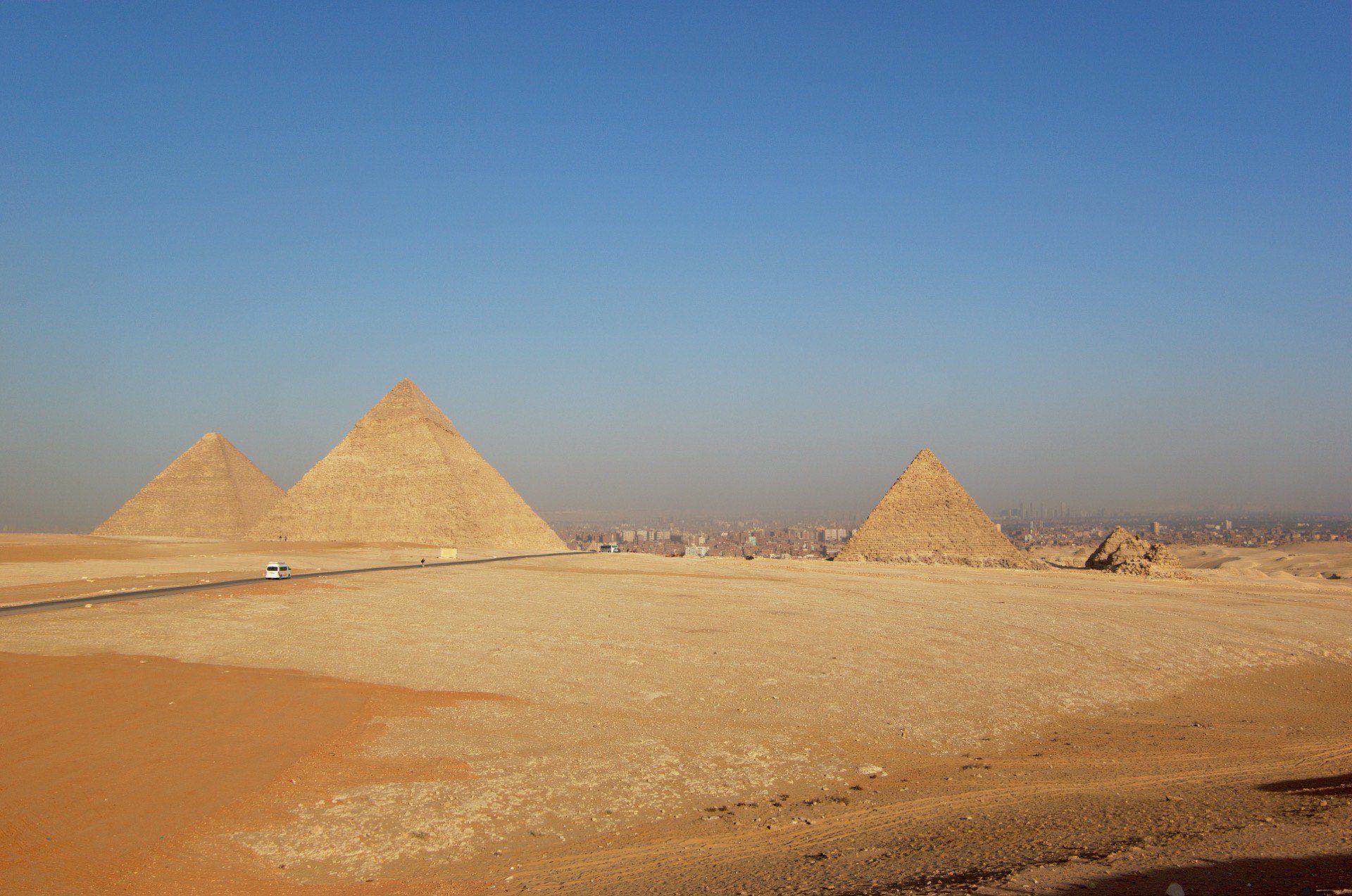
The capital region contains the highest concentration of monumental heritage in Egypt, from the Giza Plateau's three great pyramids to the dense necropolis at Saqqara and the world-class museum collections of Cairo's Tahrir and Giza districts.
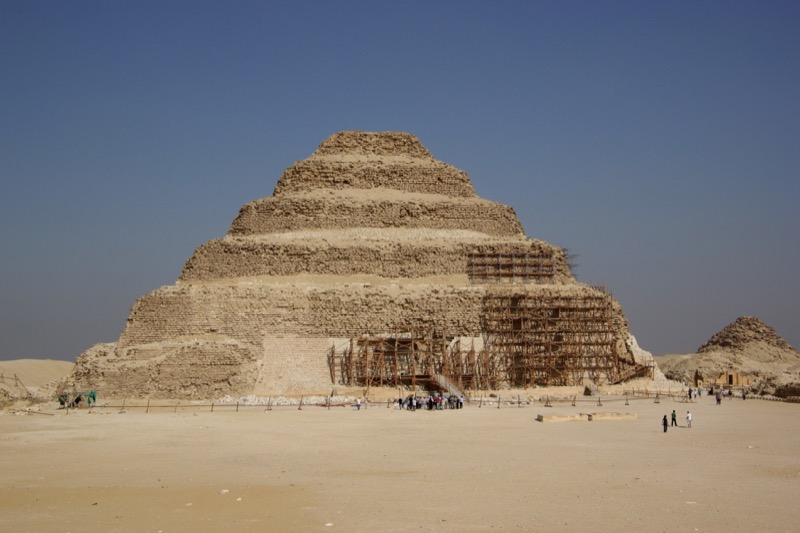
Saqqara Necropolis
The Step Pyramid of Djoser, designed by Imhotep around 2650 BCE, is the world's oldest stone monument of substantial scale and the prototype for all subsequent pyramid construction. The surrounding necropolis spans five kilometres and encompasses mastaba tombs from the Early Dynastic period through the Ptolemaic era, New Kingdom tomb chapels with well-preserved painted reliefs, and the Serapeum — a rock-cut catacomb housing the massive granite sarcophagi of the Apis bulls.
Recent excavations by the Egyptian Ministry of Tourism and Antiquities have since 2018 revealed a series of intact Late Period burial shafts, several containing wooden coffins with original polychrome decoration. Our briefing tracks the access status of these newly opened areas. The main pyramid enclosure reopened in 2021 after restoration work on the pyramid's exterior casing and the re-erection of the enclosure wall. Access to the inner pyramid chambers is limited and our review details current permit requirements.
The site is best combined with a visit to the nearby Pyramid of Teti — the oldest complete pyramid with interior Pyramid Texts — and the mastaba tombs of Kagemni and Mereruka, whose painted and carved walls provide an unparalleled record of Old Kingdom daily life. Allow a minimum of four hours for a thorough exploration. Morning visits are strongly recommended to beat the afternoon heat and peak coach tour windows.
Read the Greater Cairo plateau guide
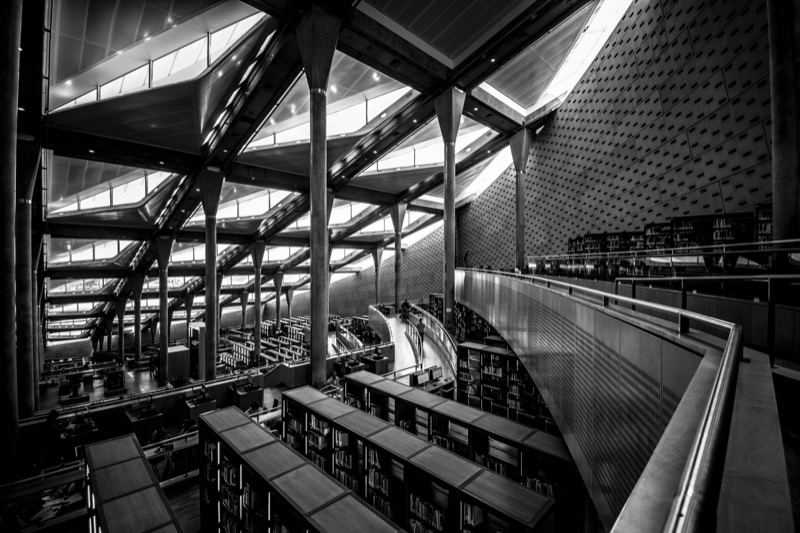
Giza District
Opened in phases from 2022, the Grand Egyptian Museum at Giza is the largest archaeological museum in the world by floor area, covering approximately 480,000 square metres. The centrepiece is the complete Tutankhamun collection — over 5,000 objects, many exhibited publicly for the first time, including reconstructed golden throne chariot components, gilded wooden beds, and the famous golden mask and nested coffins displayed in a purpose-built gallery.
Beyond Tutankhamun, the GEM's permanent galleries trace Egyptian history from Prehistory through the Roman period across two main floors and a grand staircase hall where 87 colossal royal statues form a permanent processional display. Our museum specialist Dr. Nadia Fares has produced a comprehensive section-by-section briefing, identifying the most significant individual objects in each gallery, the current temporary exhibition schedule, and the practical routing that avoids bottlenecks during peak periods. Ticket prices vary by Egyptian resident and international visitor categories.
Read the full Cairo museums guide
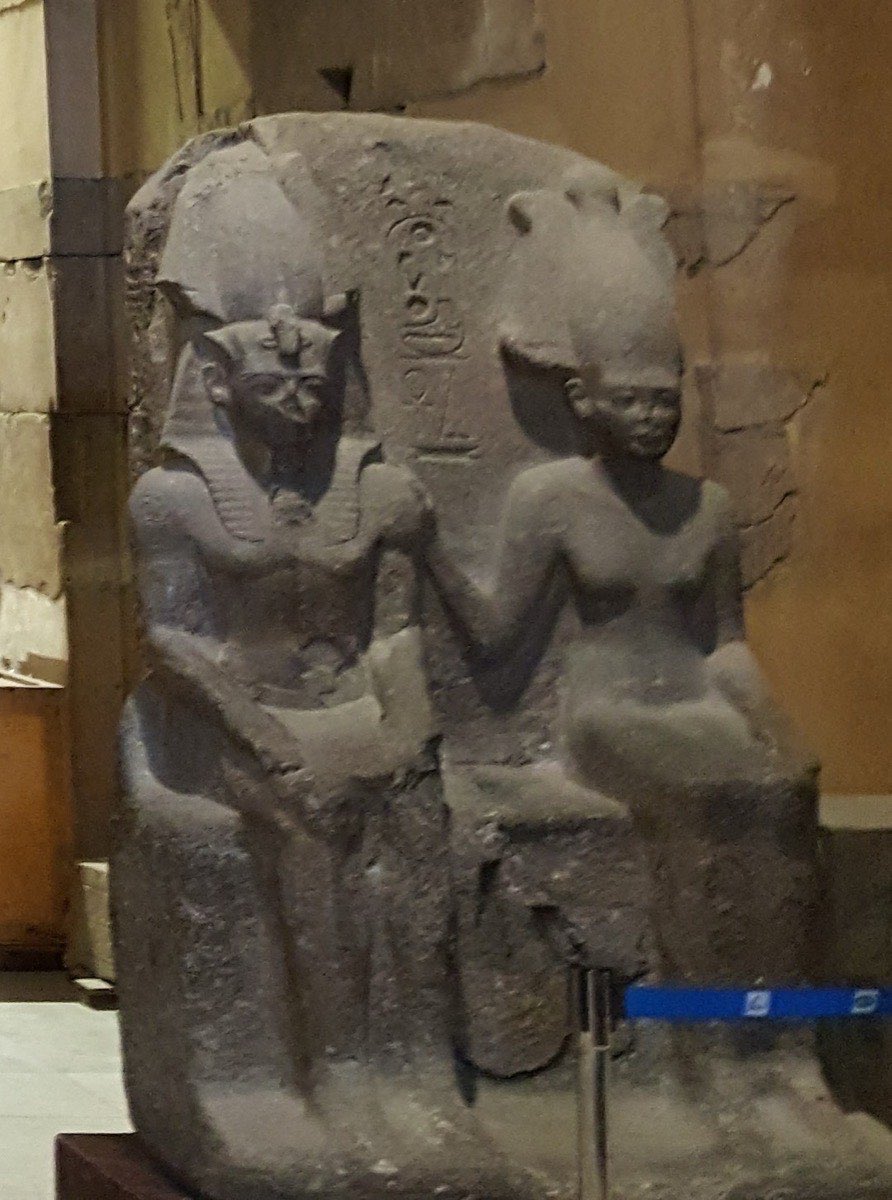
Tahrir Square
Founded in 1902, the Egyptian Museum on Tahrir Square remains one of the most important repositories of pharaonic material culture in the world, despite the partial transfer of the Tutankhamun collection to the GEM. The museum's 107 halls contain approximately 120,000 objects spanning 5,000 years, including the Royal Mummy Room, the Amarna Period gallery, and an extensive collection of Ptolemaic and Roman-era material that is often overlooked by visitors focused on the New Kingdom highlights.
Our review provides a curated routing plan for the museum's two floors, identifying the ten objects most likely to be missed by visitors following standard tour routes. These include the Middle Kingdom wooden model armies from Assiut, the painted limestone seated scribe from the Old Kingdom, the fragmented Narmer Palette context display, and the extraordinary jewellery collections from Tanis — intact royal burials from the Third Intermediate Period that rival Tutankhamun's grave goods in quality and are displayed in a dedicated basement treasury.
Read the full Cairo museums guideThe Luxor region contains the densest concentration of pharaonic monuments anywhere on earth. The East Bank holds Karnak and Luxor Temple; the West Bank encompasses the Valley of the Kings, Valley of the Queens, Medinet Habu, Deir el-Bahari, and dozens of private tomb chapels.
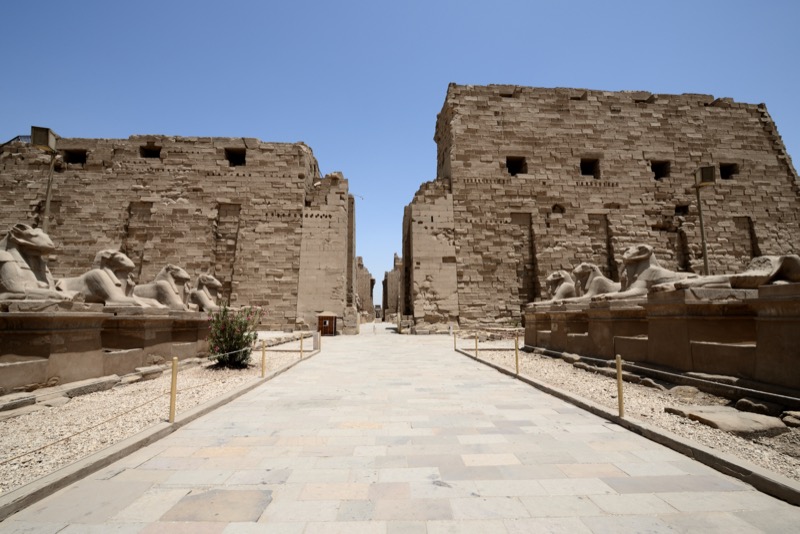
East Bank, Luxor
The largest religious building ever constructed, Karnak spans 247 acres and was built, modified, and extended over thirteen centuries from approximately 2055 BCE under Mentuhotep II through to the Ptolemaic period. The site contains four main precincts — Amun-Re, Montu, Mut, and Amenhotep IV — though only the Precinct of Amun-Re is fully open to general visitors. The Great Hypostyle Hall contains 134 sandstone columns, the largest of which rise 23 metres. Their surfaces retain paint in places; our briefing identifies the most intact polychrome relief areas and the best morning light conditions for viewing them.
The Precinct of Mut — separated from the main complex by a processional avenue — is frequently overlooked despite containing the remains of the Mut Temple and a horseshoe-shaped sacred lake once populated with over 700 seated Sekhmet statues, many still in situ. Our routing plan covers both precincts and addresses the current access status of the Festival Temple of Thutmose III (Akh-Menu), one of Karnak's architecturally distinctive sub-structures that is accessible on a separate ticket.
The Karnak Open Air Museum, located inside the complex's northwest corner, holds reconstructed chapels and relocated reliefs including the White Chapel of Senusret I — a Middle Kingdom limestone structure of exceptional elegance. Museum access is included with the main Karnak ticket. Sound and Light show tickets are available separately and run on a set weekly language schedule; our review notes current performance times.
Read the temples guide
East Bank, Luxor
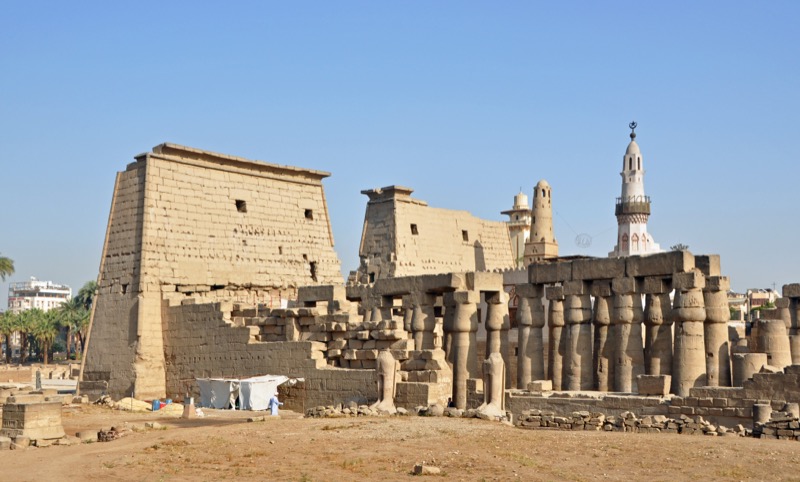
Built primarily under Amenhotep III (c. 1390 BCE) and substantially expanded by Ramesses II, Luxor Temple stood at the southern terminus of the processional avenue connecting it to Karnak, a distance of roughly three kilometres. The Avenue of Sphinxes — fully excavated and opened in its current form in 2021 — now allows visitors to walk the complete ceremonial route between the two temples, a project three decades in the making that transformed the urban landscape of modern Luxor. Our review details the access logistics for the full avenue walk, which requires entry tickets at both ends.
The temple interior includes a remarkable Roman chapel inserted within the hypostyle hall, complete with fragmentary 4th-century painted Christian iconography superimposed over the pharaonic reliefs — a layering of civilisations visible in a single chamber. The mosque of Abu Haggag, built into the upper level of the First Pylon court, continues in active use and illustrates the site's living continuity from pharaonic times through the present. Evening illuminations begin at sunset; our briefing provides current operating hours and the most effective position for photographing the reflected pylons in the Corniche-side canal.
Read the full Luxor guide
West Bank, Luxor
The Valley of the Kings served as the primary royal burial ground for New Kingdom pharaohs from Thutmose I (c. 1493 BCE) through to Ramesses XI (c. 1077 BCE), a period spanning roughly 500 years. Sixty-three tombs have been recorded in the valley; current standard access covers a rotating selection of approximately eighteen to twenty, with a basic ticket allowing three tombs and premium tickets required for KV 17 (Seti I), KV 62 (Tutankhamun), and KV 57 (Horemheb).
Our review provides current access status for all open tombs and recommendations prioritised by preservation quality, artistic programme, and crowd levels at different times of day. The tomb of Ramesses VI (KV 9) contains some of the most complete astronomical ceiling paintings in Egypt — the Amduat and Book of Gates rendered across a double-height decorated corridor — and is accessible on the standard ticket. KV 11 (Ramesses III) is unusually long at 188 metres and contains rare side-chamber paintings depicting daily life scenes absent from most royal tombs. Our briefing notes that summer visit times should be planned before 09:00 to avoid the most extreme interior temperatures.
Read the full Luxor guideSouthern Egypt and northern Nubia hold some of the country's most dramatic monuments, from the granite-island temple of Philae to the relocated cliff temples of Abu Simbel, saved from the rising waters of Lake Nasser in one of archaeology's most ambitious rescue operations.
Lake Nasser, Aswan
Commissioned by Ramesses II around 1264 BCE and carved directly from a sandstone cliff, Abu Simbel comprises two temples: the Great Temple of Ramesses II, fronted by four 21-metre seated colossi of the king, and the smaller Temple of Hathor and Nefertari, dedicated to his principal wife. The engineering achievement of the original construction is surpassed only by the UNESCO-led relocation of 1964–1968, during which the entire complex was cut into 2,000 blocks averaging 20 tonnes each and reassembled 65 metres higher and 200 metres inland to escape Lake Nasser's rising waters.
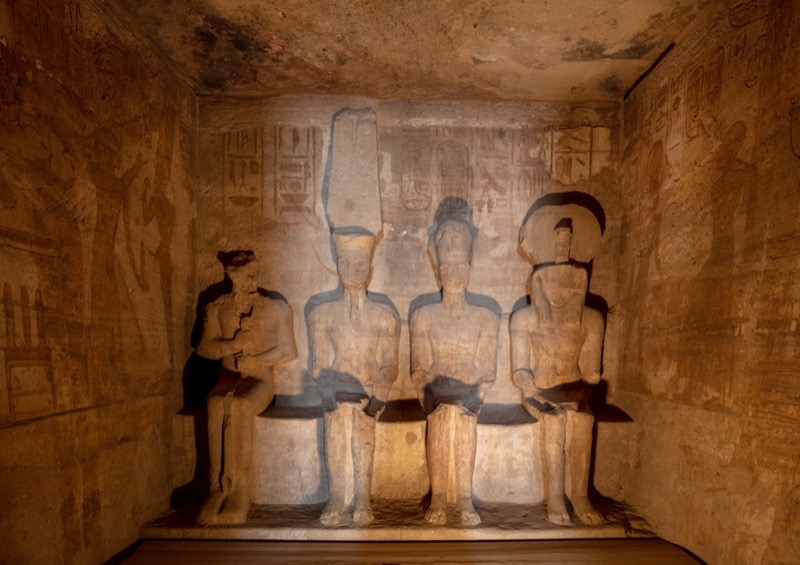
The interior of the Great Temple is oriented so that twice yearly — on 22 February and 22 October — the rising sun penetrates the full length of the temple and illuminates three of the four seated figures in the innermost sanctuary, leaving only the deified Ptah (god of darkness) in shadow. Our review confirms current solar alignment viewing arrangements and the additional crowd management measures in place on these two dates. The interior walls carry one of the most complete records of the Battle of Kadesh, the largest chariot battle of the ancient world.
Read the Nile cruise route guide
Aswan, South Egypt
The Temple of Isis at Philae — now relocated to the island of Agilkia as part of the same UNESCO rescue programme that saved Abu Simbel — is one of the best-preserved temple complexes in Egypt. Construction began under Ptolemy II and continued through the Roman Imperial period, making it one of the last temples built in the classical Egyptian style before Christianisation ended the tradition. The temple was used as an active Christian church in the 6th century CE; early Christian crosses carved over hieroglyphic texts are visible throughout the hypostyle hall.
Access requires a short motorised boat crossing from the Shellal boat landing, south of the Old Aswan Dam. Our review provides current boat hire rates, recommended negotiation approach, and the optimal time of day for visiting — late afternoon light illuminates the reliefs on the western colonnades particularly well. The Sound and Light show at Philae runs on a schedule that changes seasonally; current language performance times are included in our briefing. The nearby Khnum Temple at Esna, now fully excavated to its original floor level after clearance of the overlying village, is covered in a companion briefing.
Read the Nile cruise route guideMiddle Egypt and the Nile Delta contain extraordinary monuments that see a fraction of the visitor numbers of the Luxor or Giza circuits. For researchers, repeat visitors, and travellers seeking uncrowded access to sites of comparable historical significance, these regions are where our specialist knowledge adds the most value.
Minya Governorate
Carved into the eastern limestone cliffs overlooking the Nile at Beni Hassan, the 39 Middle Kingdom rock-cut tombs of provincial governors and nomarchs dating from approximately 2100 to 1900 BCE constitute one of the finest collections of ancient Egyptian painting outside a major museum. Twelve tombs are currently accessible to visitors; the most significant are the tombs of Khnumhotep II (BH3), Amenemhat (BH2), and Baqet III (BH15), whose walls document wrestling techniques, agricultural cycles, hunting scenes, and — in Khnumhotep II's tomb — one of the most important representations of Semitic traders entering Egypt from Canaan.
The site requires a boat crossing from the West Bank at Minya and is typically reached as a day excursion from Cairo or Minya. Access has improved significantly since 2019, with a new visitor centre, improved pathways, and regulated guide services. Our briefing covers current transport logistics from Cairo and the security clearance procedures that are standard for independent travellers in Minya Governorate. The companion site of Speos Artemidos — a rock-cut chapel of Hatshepsut with unusually preserved colour — is accessible via a 30-minute walk from Beni Hassan.
Read the heritage tours overview
Alexandria
Alexandria's heritage circuit centres on three main sites: the Bibliotheca Alexandrina — a modern cultural institution housing eleven specialised libraries, four museums, a planetarium, and an arts centre — the Graeco-Roman Museum (currently undergoing restoration, due to reopen in 2026), and the Catacombs of Kom el-Shuqafa, the largest Roman funerary complex in Egypt, whose three subterranean levels contain burial niches for an estimated 300 individuals and a triclinium where ritual meals were held adjacent to the tomb chambers.
Pompey's Pillar — a 27-metre red Aswan granite column erected in honour of Diocletian in 297 CE — stands within the remains of the ancient Serapeum complex; the adjacent underground tunnels once held portions of the library's overflow collections. Our Alexandria briefing also covers the recently upgraded National Museum of Alexandria, whose three floors chronicle the city's Pharaonic, Graeco-Roman, Coptic, and Islamic layers with well-labelled English and Arabic exhibits. Day-trip logistics from Cairo by high-speed rail are detailed in the briefing.
Read the heritage tours overviewBeyond site reviews, our team provides structured advisory support at three levels of depth. Each is designed for a different stage and type of travel planning.
Written Documents
A focused written report on one specific site, covering historical background, current access conditions, recommended visit timing, photography permit requirements, and a curated further reading list. Delivered within 48 hours via email, six to twelve pages depending on site complexity. Suitable for visitors who have chosen their destinations and want to arrive thoroughly prepared. Pricing starts at the Explorer plan; see our pricing page for current rates.
Structured Planning
A day-by-day travel plan covering monument sequencing, realistic time budgets per venue, transport options between sites, crowd avoidance strategies, and accommodation district recommendations. Accounts for seasonal factors, current restoration closures, and the physical demands of specific sites. Suitable for groups of two to twelve; available in English and, on request, Arabic. Included in our Researcher and Scholar plans.
Live Sessions
A one-hour video call with a senior advisor from our Cairo team. Designed for researchers, journalists, documentary teams, and specialist travellers with targeted questions about specific sites, excavation access, museum collection details, or permit procedures. Sessions can be recorded and followed up with a written summary. Available in English and Arabic. Included in our Scholar plan.